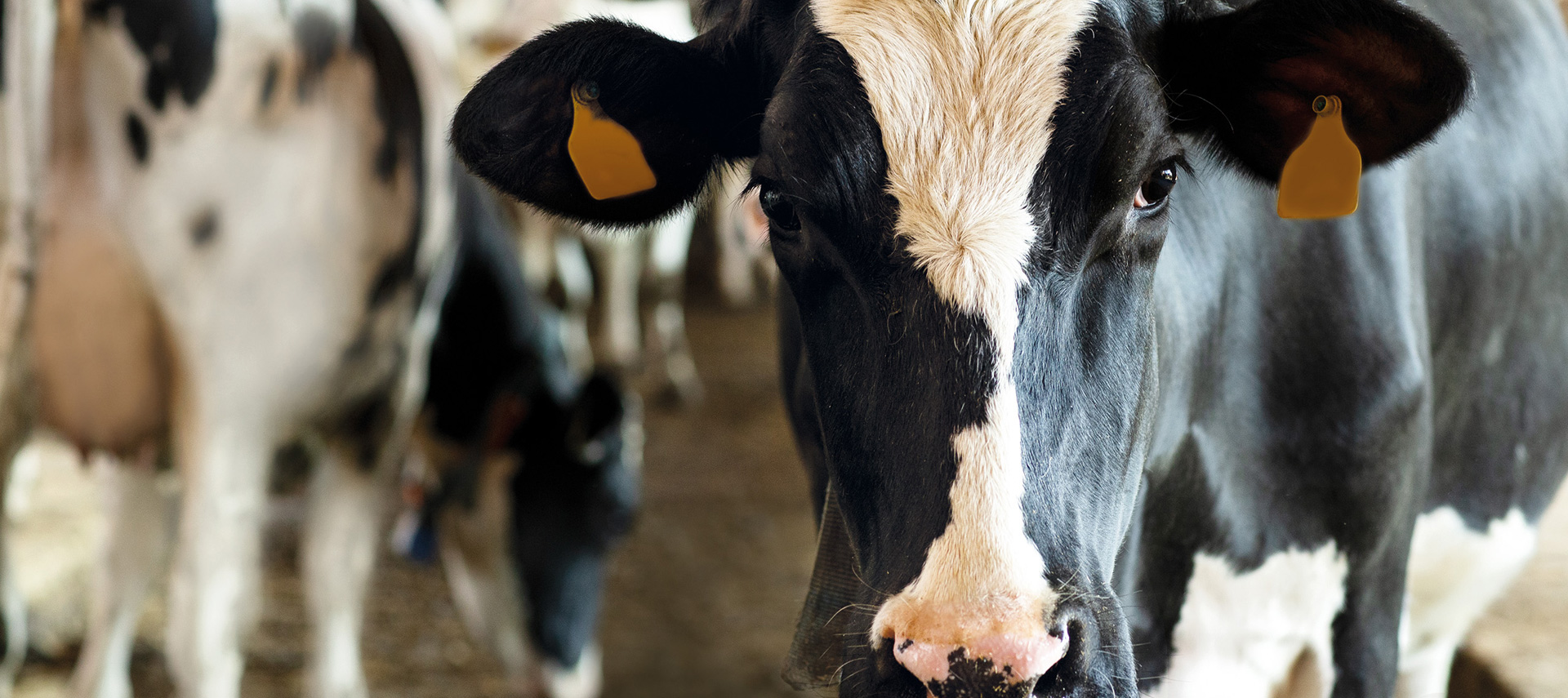
Dry walking areas: Good for hooves, barn hygiene and the environment
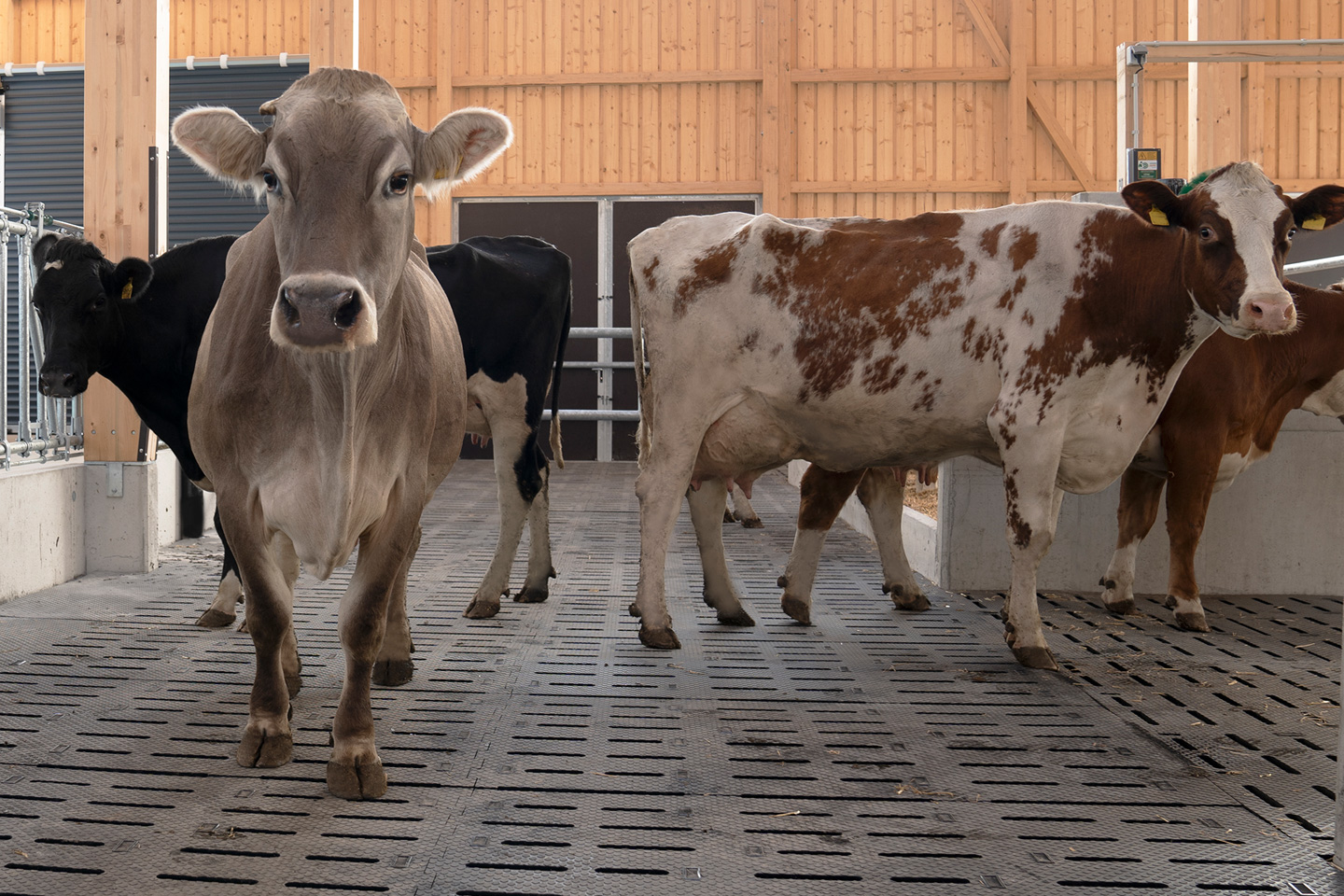
Healthy hooves are an essential foundation for animal welfare and performance in the dairy barn. To ensure that cows can comfortably and safely reach the feed table, water trough, free stall and milking area, walking surfaces must be suitably soft for the animals, clean and as dry as possible. Rapid drainage of liquids contributes to future-proof barn design in several ways: it supports hoof health, improves barn hygiene and can effectively reduce ammonia emissions.

Dry hooves are better protected
The skin around the hoof is an important natural barrier against germs. If cows stand continuously on wet, soiled walking areas, this protective function is weakened. This can increase the risk of infectious hoof diseases such as digital dermatitis or interdigital phlegmon.
Dry walking areas help reduce stress on the hooves. To ensure liquids drain reliably, a sufficient slope and a surface that does not obstruct drainage with deep profiles or hard-to-clean structures are required. Flat-textured flooring supports cleaning and helps separate feces and urine more quickly.
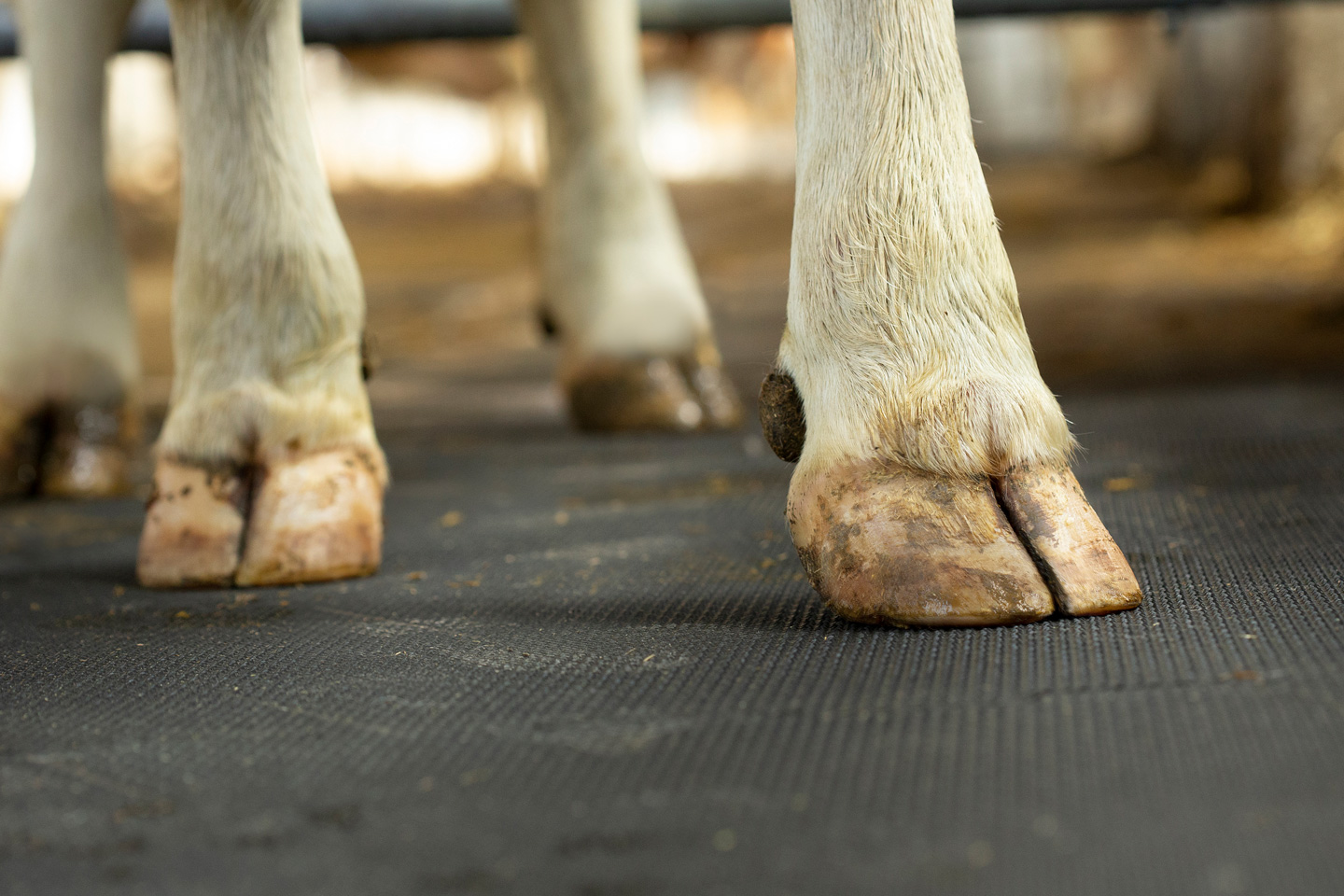
Softness and slip resistance go hand in hand
A walking surface must not only be dry, but also safe and suitably soft for the animals. On an elastic rubber flooring, the cow’s longer outer claw can sink in slightly. This distributes pressure more evenly, relieving the hooves and joints when standing and walking.
At the same time, cows need secure footing, even when the surface is occasionally moist or covered in a smear layer. Proven, soft-abrasive surfaces with integrated corundum combine high slip resistance with functional hoof abrasion that supports the natural shape of the hoof.
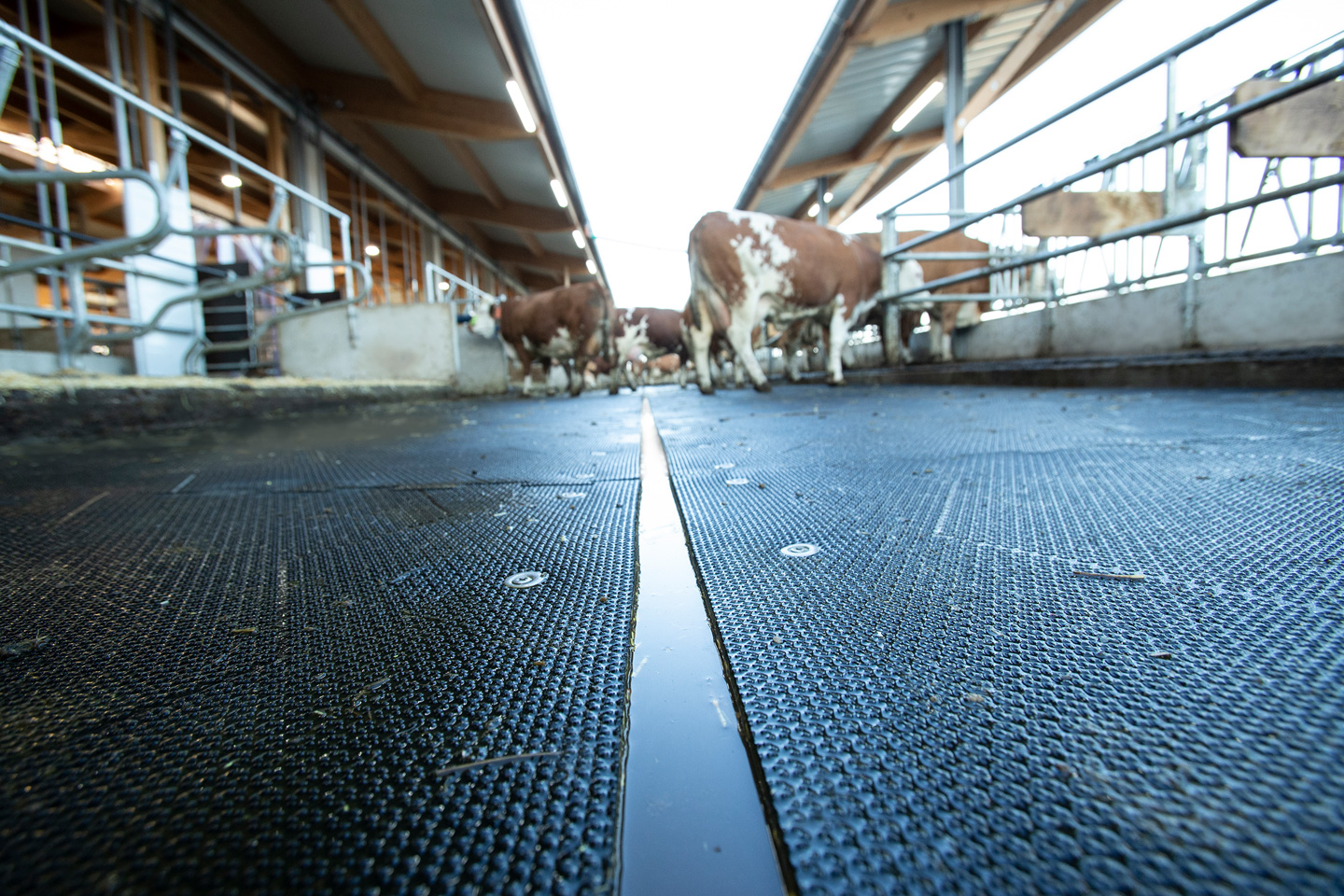
Less ammonia thanks to rapid separation of feces and urine
Ammonia is produced in particular where urine containing urea comes into contact with the enzymes present in feces. In dairy barns, this mainly affects the walking areas and the slurry pit. The faster the urine is drained away from the walking surface, the less time there is for this reaction to take place.
Emissions-reducing flooring concepts therefore rely on slopes, effective drainage and surfaces that are easy to clean. They reduce standing liquids between scraper intervals and support rapid separation of feces and urine. This not only improves conditions for the cows, but also makes a tangible contribution to greater environmental protection in the barn.

The right solution for different floor types
Depending on the barn design and the existing area, different solutions are available. For concrete walking alleys, a concreted slope in combination with a suitable rubber mat can support urine drainage. The wedge-shaped profiKURA 3D creates a slope of around 3 % toward the center of the walking alley directly through the mat - making it a practical option for new construcion and retrofitting existing barns. The profiDRAIN drain channel mat combines gently curved, soft walking surfaces with a slope of around 6 % toward the drain channels. This directs liquids into the channels for efficient drainage.
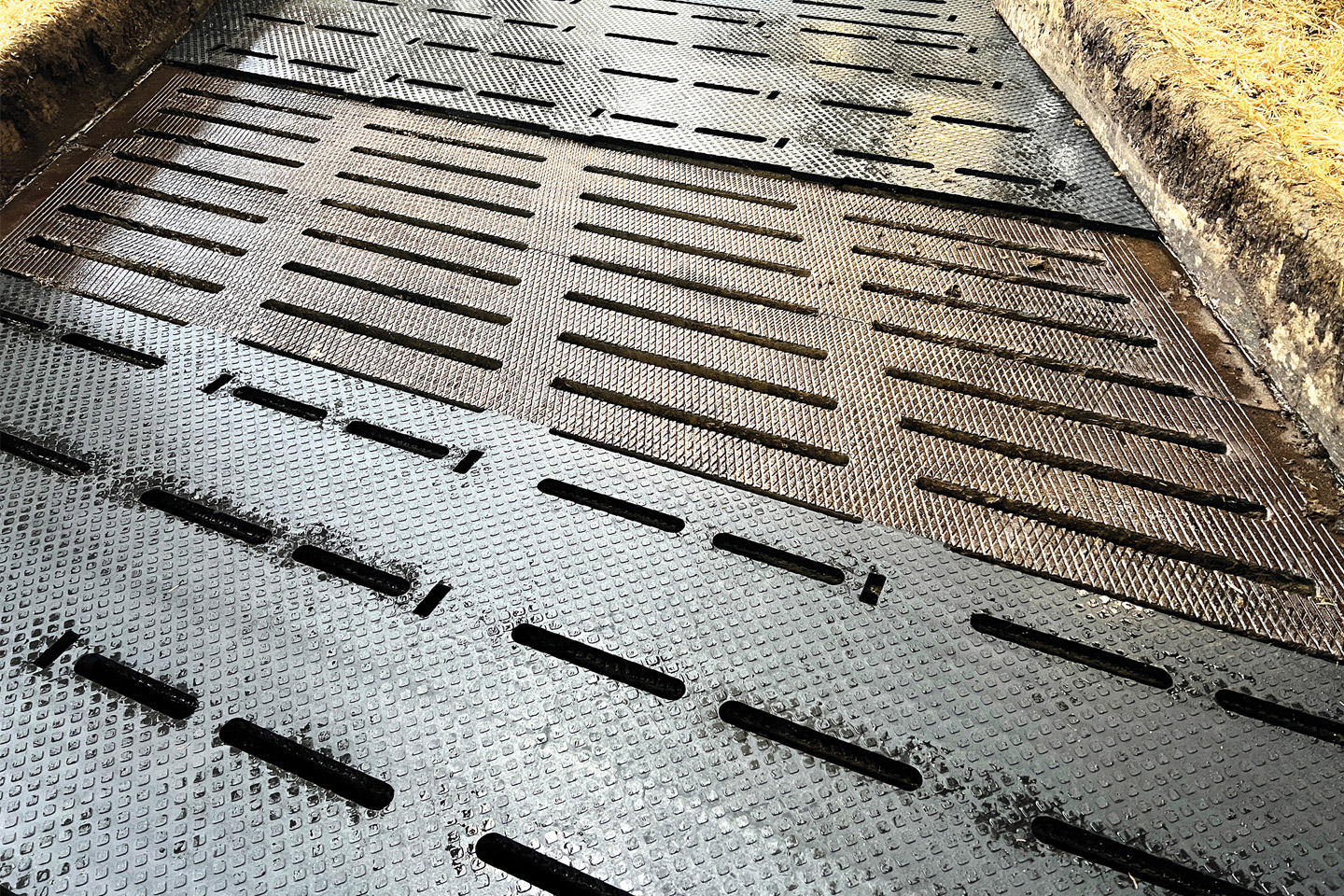
Suitable solutions are also available for slatted floors: the espaFLEX slatted flooring combines an animal-friendly soft and slip-resistant walking area with a slope on both sides and a slit proportion that can be flexibly reduced. This allows animal comfort, drainage and partial covering of the slurry pit to be combined as required.
Animal welfare, hygiene and environmental protection combined effectively
Dry walking areas are far more than just a detail of barn equipment. They combine hoof health and safe movement with improved hygiene and reduced ammonia formation. By planning urine drainage, manure removal and slip resistance together from the outset, farmers create the right conditions for healthy, active cows - and for a future-proof dairy farm.
Further information:
Press information profiKURA 3D
Product profiKURA 3D
Press information profiDRAIN
Product profiDRAIN
Press information espaFLEX
Product espaFLEX
Press information Soft walking, safe footing
Guide Healthy hooves
Guide Emission reduction
Guide Optimal walking areas
Guide Effects of lameness
Guide Hoof trimming
Information on Dry walking areas
Information on Slatted floor rethought
Download all images of this press information in print quality.
Download image packageDownload the complete press information as a PDF.
Download as PDFThe images may only be used free of charge in an editorial context relating to KRAIBURG Elastik, provided that the image credit ‘KRAIBURG Elastik’ is included. Any other use requires prior written consent. Please send a copy or a link to the publication.
About KRAIBURG Elastik
Gummiwerk KRAIBURG Elastik GmbH & Co. KG has been developing and manufacturing elastic rubber flooring for cattle and horse housing since 1968. In Tittmoning, Germany, around 200 employees combine experience in rubber processing with practical product development. The aim is to support animal welfare, safety, performance and efficient barn management with innovative solutions. The DIN-compliant products are tested in the company’s own laboratory, in test barns and by independent institutes. KRAIBURG Elastik holds the DLG quality seal ‘CONTINUOUS MONITORING’. The barn flooring specialist is committed to resource-saving production and repurposes tire rubber as a raw material for robust flooring. The company is part of the KRAIBURG Group.


